
The Latest Publications

Inside India’s Funding Failure in Rare Genetic Disease Care

On February 20, 3-year-old Arohi Kajabe died at home in Maharashtra’s Ahmednagar district after waiting for more than two years for medicines that never came.Her father, Yogesh Kajabe, a daily-wage farm laborer who plants cotton and soybeans, had sold his only piece of land and borrowed more than $6,000 to keep her alive.Arohi had Gaucher’s disease, a rare genetic disorder that silently destroys vital organs. Two injections every month could have saved her life—but each cost $1,200.“My only chil...
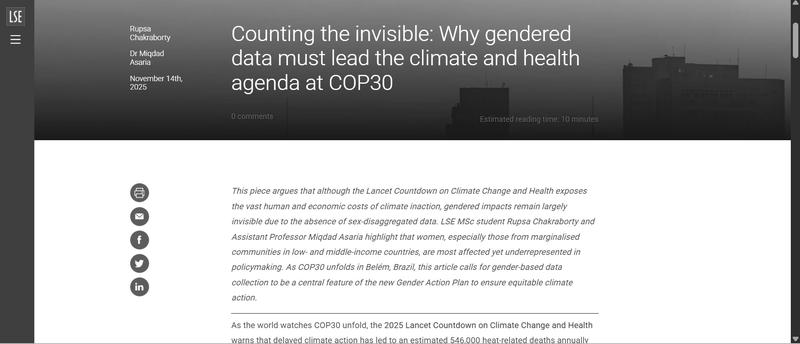
Counting the invisible: Why gendered data must lead the climate and health agenda at COP30 - LSE Global Health

This piece argues that although the Lancet Countdown on Climate Change and Health exposes the vast human and economic costs of climate inaction, gendered impacts remain largely invisible due to the absence of sex-disaggregated data. LSE MSc student Rupsa Chakraborty and Assistant Professor Miqdad Asaria highlight that women, especially those from marginalised communities in low- and middle-income countries, are most affected yet underrepresented in policymaking. As COP30 unfolds in Belém, Brazil...

After plane crash, Ahmedabad residents lined up to donate blood breaking records

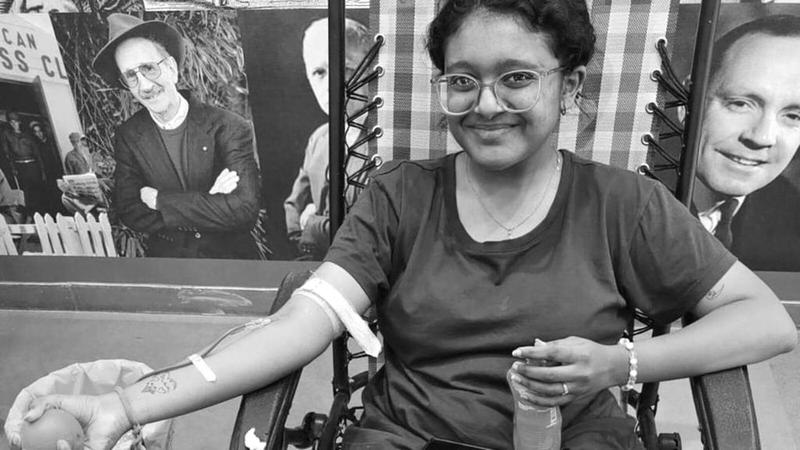
Across Ahmedabad, hundreds echoed the same resolve. As news of the crash spread and fears of mass casualties intensified, people of Gujarat responded with quiet urgency. From teenagers to the elderly, office workers to homemakers, people rushed to blood banks across the city. In just five hours, the Red Cross centre at Navrangpura collected 550 units of blood, smashing all previous records for single-day, single-centre donations in the city. “It was one of the most heartwarming moments of my c...

Relatives of students who died ‘due to ragging’ look for closure: ‘Doors are open, hoping my son will come home’

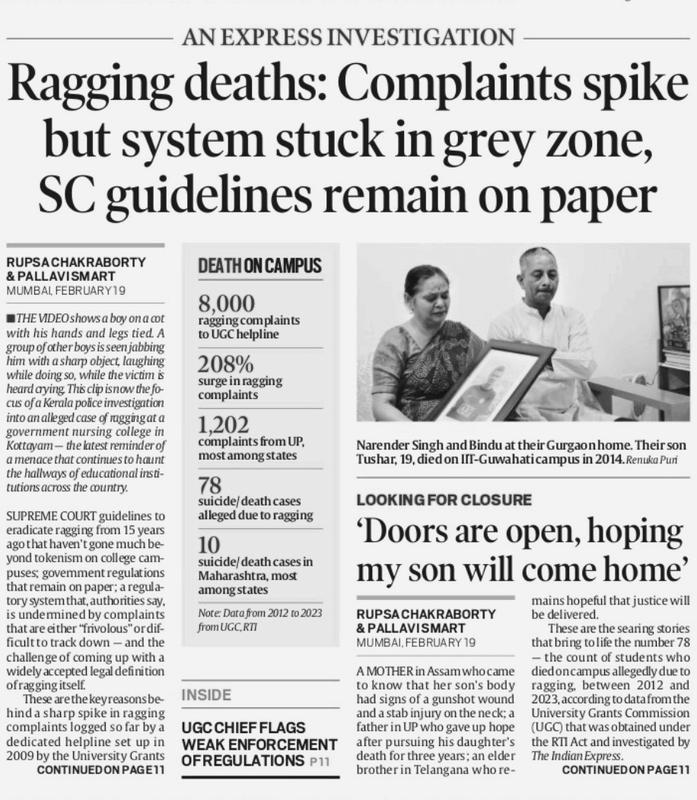
A mother in Assam who came to know that her son’s body had signs of a gunshot wound and a stab injury on the neck; a father in UP who gave up hope after pursuing his daughter’s death for three years; an elder brother in Telangana who remains hopeful that justice will be delivered.These are the searing stories that bring to life the number 78 — the count of students who died on campus allegedly due to ragging, between 2012 and 2023, according to data from the University Grants Commission (UGC) th...

UGC Chairman M Jagadesh Kumar: Weak implementation of anti-ragging regulations within institutions may give perpetrators safe passage

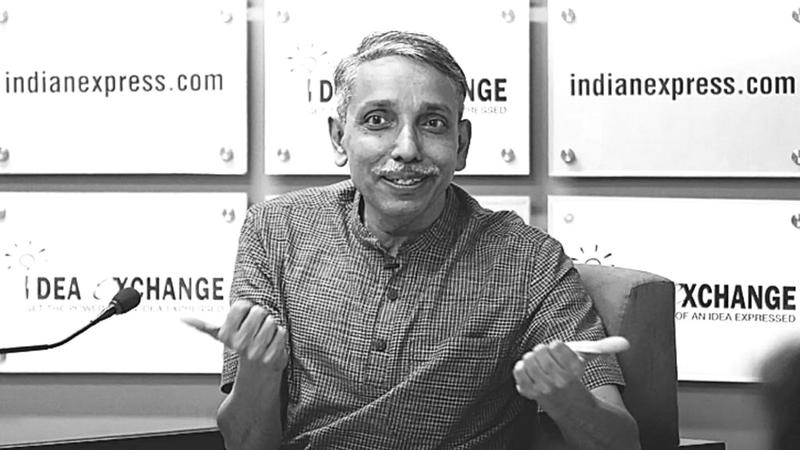
From regular advisories to follow-up action, the UGC is working on “continuous improvement” in its anti-ragging programme but it is also the responsibility of institutions to follow its regulations “in letter and spirit” to remove the menace, according to UGC Chairman M Jagadesh Kumar.“Addressing the root cause of the ragging menace is equally essential… Weak implementation of anti-ragging regulations within institutions may give the perpetrators a safe passage,” he said. Kumar was responding to...

Ragging deaths: Complaints spike, system stuck in grey zone, Supreme Court guidelines on paper

🔴 The video shows a boy on a cot with his hands and legs tied. A group of other boys is seen jabbing him with a sharp object, laughing while doing so, while the victim is heard crying. This clip is now the focus of a Kerala police investigation into an alleged case of ragging at a government nursing college in Kottayam — the latest reminder of a menace that continues to haunt the hallways of educational institutions across the country.Supreme Court guidelines to eradicate ragging from 15 years a...

India’s organ transplant paradox: women donate the most and receive the least

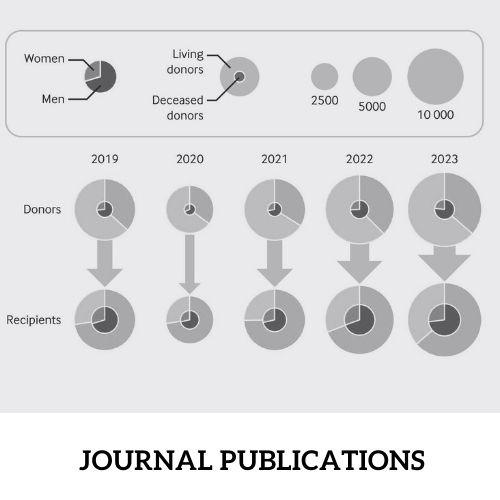
Women in India donate nearly twice as many organs as men, yet men are more likely to be recipients. Rupsa Chakraborty asks why
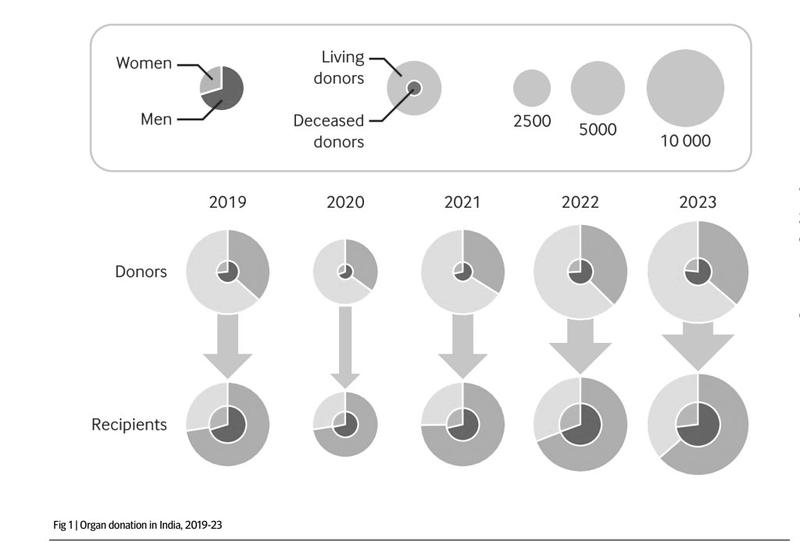
The National Organ and Tissue Transplant Organization (Notto), India’s apex government body overseeing organ donations, says that 63.8% of all living organ donors from 2019 to 2023—mostly liver and kidneys—were women. Yet men received the majority of donated organs, accounting for 69.8% of the recipients.
A BMJ analysis of the data reveals deep rooted gender inequalities pervading India’s health systems and societal attitudes to women’s health. The underlying causes of this paradox include sociocultural factors, economic dependence, and healthcare attitudes and practices, requiring a holistic approach.